

Table of Contents
When you pull up a modern trading terminal, it is easy to focus all your attention on visual patterns, flashing quotes, and indicator lines. We click a button and expect our market orders to fill instantly, rarely considering the complex digital framework that handles our account data behind the scenes. For developing market participants, evaluating the physical and digital architecture of your provider is what separates a smooth execution from expensive, hidden transaction leaks.
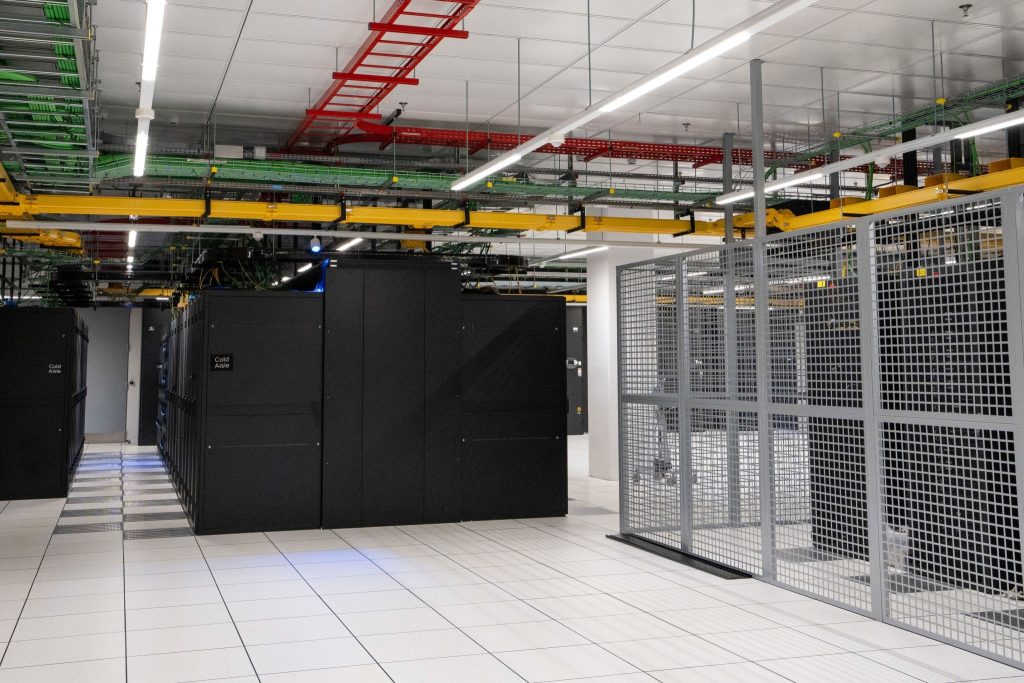
An enterprise server facility housing institutional matching engines. Source: Bloomberg / Bloomberg via Getty Images
Why should I care about broker hardware if my software runs fine?
Your local charting app might look perfectly responsive, but it is merely a visual interface communicating with distant matching hardware. If your platform’s underlying servers are located thousands of miles away from global banking hubs, your order data has to travel across massive public web pipelines to reach a counterparty.
Think of this processing delay exactly like a slow internet connection when streaming a video; a few milliseconds of lag can cause your order to land late. By the time your packet arrives, the target quote has shifted. Sourcing your environment through an elite best cfd broker ensures your platform links directly to institutional data campuses like Equinix LD4 in London or NY4 in New York, where data travels through ultra-fast fiber-optic connections.
What is a price aggregator engine and why do I need one?
If your brokerage network relies on only a single top-tier investment bank for its pricing data, your account is entirely stuck with whatever fees that individual bank decides to quote. Premium platforms bypass this limitation by implementing a specialized software mechanism called an institutional aggregation engine.
This engine works exactly like an automated flight scanner, constantly checking live buy and sell quotes across dozens of global banks simultaneously. It isolates the best available prices from the network and stitches them into a single feed on your screen. This heavy institutional competition strips away artificial padding, compressing your baseline execution costs down to minimum fractions. Without this aggregated architecture, you will constantly face wider, uncompetitive pricing layers that drain your margins over a large sample of entries.
How does the architecture handle major volatility spikes without breaking down?
The real structural health of an execution network reveals itself when high-impact economic numbers drop and markets turn frantic. During these periods, automated institutional algorithms often pull back their resting limit orders to manage corporate risk, creating a hollow order book.
A primitive retail setup will choke under this sudden drop in volume, leading to massive execution delays or platform crashes. High-performance infrastructures handle this stress smoothly by deploying multi-tiered failover server protocols. If one primary liquidity route dries up during a panic, the platform instantly shifts traffic to secondary lines within milliseconds. Your interface stays online, updates prices continuously, and allows you to manage active positions without getting hit by sudden terminal freezes.
Why do my positions occasionally fill at a different price tier?
This execution gap is known as slippage, and it represents the difference between the quote you saw on your monitor and the final transaction price recorded on your ledger. Slippage is not a hidden penalty; it is a mechanical reality that occurs when your order size outweighs the available liquidity at the top layer of the book.
If your platform lacks smart sorting tools, your multi-lot position will slide down across deeper, more expensive pricing levels to complete its fill. To minimize this drag, premier systems utilize intelligent order routing. This software splits large contract blocks into smaller, optimized packets, sending each piece to separate liquidity desks at the exact same millisecond to secure a better average entry cost.
How do account types alter the transactional math on my screen?
Your account structure alters the way transaction fees enter your ledger balance. Standard retail tiers typically bundle all processing markups straight into the bid-ask box, creating a wider gap between your buying and selling limits.
Active intraday day traders and short-term scalpers heavily avoid this setup, preferring unbundled raw or ECN accounts instead. This structure strips away the retail padding, passing direct interbank quotes onto your chart while charging a separate, flat ticket commission per lot. Knowing precisely what is a spread in trading across these distinct frameworks allows you to select a layout where the visual gap regularly drops to zero pips. You trade the uncertainty of a floating spread for the absolute predictability of a fixed administrative fee.
Is it worth setting up a Virtual Private Server for my terminal?
If you run automated trading scripts or expert advisors, relying on your home computer and residential Wi-Fi introduces dangerous technical vulnerabilities. A sudden home power drop or a minor local internet hiccup can disconnect your software right when a crucial risk boundary needs to execute.
A Virtual Private Server (VPS) acts like an industrial-grade backup computer that runs twenty-four hours a day inside the broker’s data center. Co-locating your terminal next to the primary matching engine eliminates home hardware risks completely. Your execution speeds collapse to sub-millisecond ranges, ensuring your stop-losses and trailing targets execute with absolute precision, even when your personal laptop is completely powered down for the evening.
Stop evaluating trading platforms based on superficial marketing bonuses or loud website graphics. Treat your technical framework like a serious business enterprise, pull up your terminal properties this week, and audit your average order execution speeds in milliseconds. By moving your active portfolio away from delayed retail servers and ensuring your strategy routes through robust, multi-bank aggregation loops during peak market hours, you can naturally insulate your margin from unnecessary transactional drag and run your trading with real operational control.
