
Table of Contents
For adults living with type 2 diabetes, keeping blood sugar in a healthy range is a daily balancing act shaped by food, activity, sleep, stress and medication. Now the largest clinical trial of its kind, published in the New England Journal of Medicine, suggests that a small wearable sensor can make that balancing act measurably easier — even for people who do not use insulin. Participants who used continuous glucose monitors spent approximately five more hours a day in their target blood sugar range than those relying on conventional monitoring.
What the Trial Found
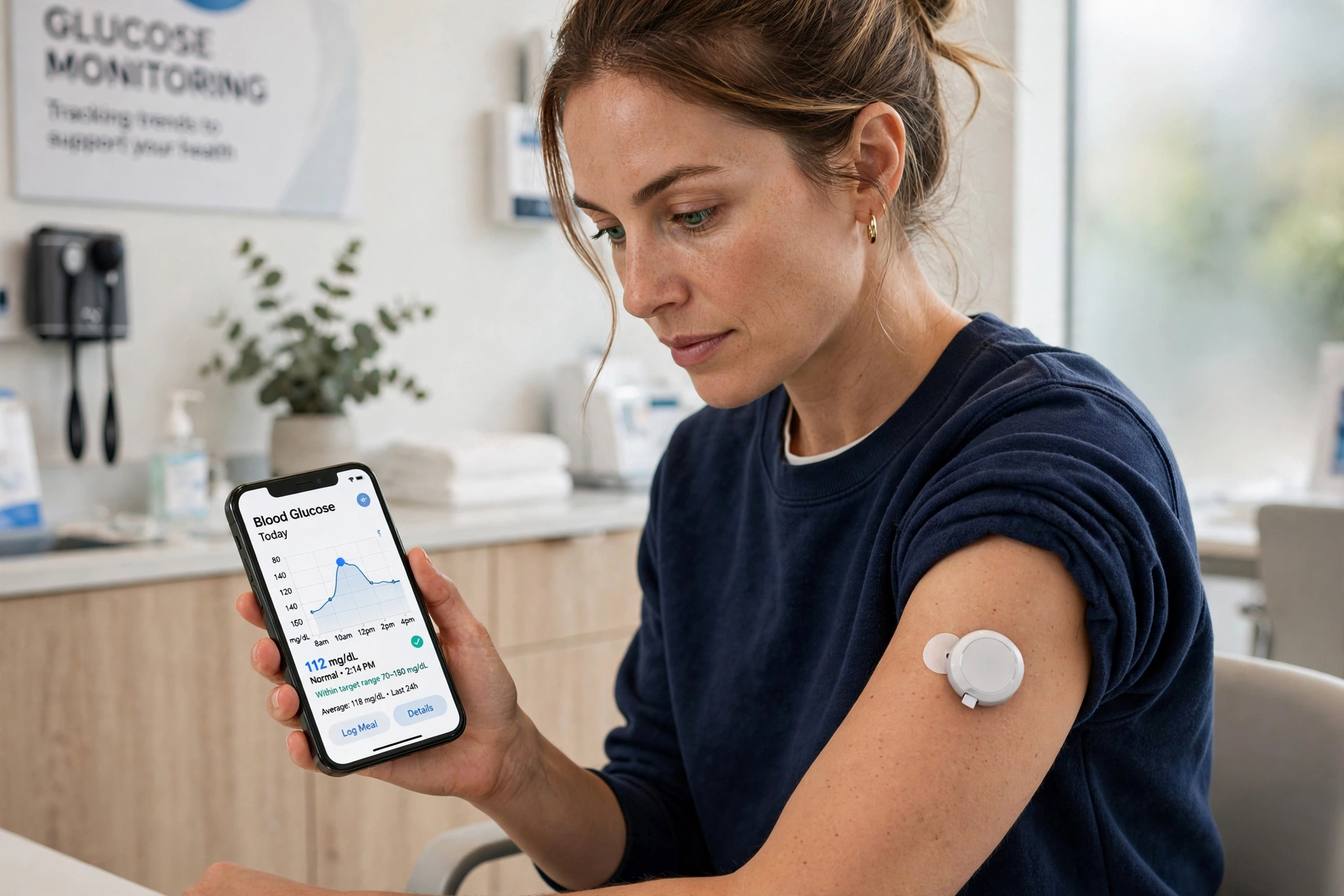
Continuous glucose monitors, often shortened to CGMs, are small sensors worn on the arm or abdomen that read glucose levels in the fluid under the skin every few minutes. Instead of a handful of finger-prick readings a day, users and their clinicians get a near-constant stream of data, complete with trend arrows showing whether levels are rising, falling or holding steady.
According to the summary of the research from the University of Colorado Anschutz, the trial is the largest of its kind to focus on adults with type 2 diabetes who manage their condition without insulin — a group that has historically had less access to the technology than people with type 1 diabetes. Gaining roughly five extra hours a day in range is clinically meaningful, because time in range is closely linked to the risk of long-term complications affecting the eyes, kidneys, nerves and heart.
Why Real-Time Feedback Changes Behaviour
Clinicians say the value of a CGM is not just the numbers themselves, but what people do with them. Seeing a glucose rise after a particular meal, or a gentle fall after a short walk, turns abstract advice into immediate, personal feedback. Over weeks, those small lessons compound into habits: a different breakfast, a ten-minute stroll after dinner, or a conversation with a doctor about adjusting medication timing.
That feedback loop resembles the way other everyday habits are built. As our guide to rebuilding focus in a world full of distractions explains, small, visible signals repeated daily tend to change behaviour far more reliably than occasional bursts of willpower. Glucose data works the same way — it makes an invisible process visible, early enough to act on it.
Who Stands to Benefit Most
Type 2 diabetes affects hundreds of millions of adults worldwide, and the large majority do not use insulin. Until recently, CGMs were prescribed mainly to insulin users, partly because of cost and partly because evidence in other groups was thinner. This trial strengthens the case for wider access, particularly for people whose blood sugar remains above target despite oral medication and lifestyle changes.
The technology is also converging with the rest of digital health. Just as innovations described in our look at technology in eye care are helping specialists detect problems earlier, continuous data from wearables is shifting diabetes care from occasional snapshots to ongoing, preventive management.
The Practical Questions That Remain
Enthusiasm should be balanced with practicality. Sensors must be replaced every one to two weeks, supplies can be expensive without insurance coverage, and some users find the stream of readings anxiety-provoking rather than empowering. Skin irritation, alarm fatigue and data overload are real concerns, and a CGM is not a substitute for medical advice. The American Diabetes Association continues to stress that technology works best alongside regular clinical follow-up, nutrition support and an individualised treatment plan.
Cost and coverage will decide how far the benefits spread. If insurers and health systems accept time in range as the outcome that matters, wider reimbursement may follow the evidence. If not, CGMs risk becoming another example of effective technology reaching mainly those who can pay out of pocket.
What Patients Can Do Now
Adults with type 2 diabetes who are curious about CGMs can start by asking their clinician three questions: whether their current readings show enough variability to make continuous data useful, whether their insurance covers sensors for non-insulin users, and how the data would actually change their treatment decisions. Bringing a food and activity log to that conversation helps, because the sensor’s insights are most powerful when interpreted in context.
The broader lesson of the trial is encouraging. Better information, delivered at the moment decisions are made, helped people spend five more hours a day in a healthier range — without insulin and without drastic intervention. For a condition managed in thousands of small daily choices, that kind of quiet, continuous support may prove to be one of the most practical advances in years.
