
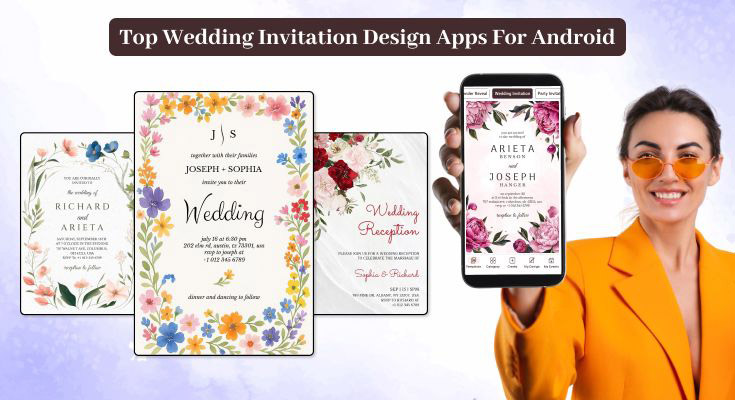
Table of Contents
A comparative guide to invitation tools that help couples and planners create polished wedding invites with clear formatting and practical output options.
Introduction
Wedding invitations often set the first “visual impression” of the big day. Even a simple design can communicate formality, personality, and a sense of cohesion with the celebration, especially when the typography and spacing feel intentional.
This category is built for couples and planners who want a finished invitation quickly without needing design training. In most cases, the work is choosing a style direction, fitting real details into a template (names, date, venue, RSVP line), and keeping the result readable in both print and digital form.
Tools in this space differ in where they simplify the process. Some focus on editable templates and print-ready exports, giving more control over layout. Others prioritize sending and RSVP collection, keeping design changes constrained so invitations can be completed faster.
Adobe Express is a useful starting point for many wedding invitations because it provides approachable templates with enough editing control to keep hierarchy and spacing clean, while maintaining a clear path to printable output.
Best Wedding Invitation Design Tools
Best wedding invitation design tool for a quick, print-oriented template editor that stays approachable
Adobe Express
Best for couples and planners who want an editable wedding invitation template with a straightforward path to print-ready output.
Overview
Adobe Express offers invitation templates and a drag-and-drop editor that allows users to make invitations to print, with an emphasis on readable layouts and print-oriented output.
Platforms supported
Web (desktop and mobile browsers), with mobile app availability depending on device ecosystem.
Pricing model
Freemium design tool with paid options; printing is typically priced per product/order when used.
Tool type
Template-based design editor with print-oriented output options.
Strengths
- Templates that establish hierarchy for wedding essentials (names, date, location, RSVP line).
- Straightforward controls for alignment, spacing, and typography adjustments without design training.
- Practical for quick variants (ceremony-only vs. ceremony + reception, multiple language versions, weekend schedule inserts).
- Print-aware workflow that helps keep margins and sizing aligned with standard invitation formats.
Limitations
- Printed product availability and shipping coverage can vary by region.
- Advanced prepress controls and highly specialized typography workflows are not the main emphasis.
Editorial summary
Adobe Express fits the mainstream wedding invitation need: a clean template that can be personalized quickly while still looking orderly. For non-designers, the benefit is that templates already solve basic composition, so the remaining work is mainly fitting details into a readable structure.
The editing workflow tends to be approachable, with enough flexibility to refine spacing or adjust type hierarchy if names or venue lines run long. That matters for weddings, where real-world details can be unpredictable and invitations often need small revisions.
Compared with send-first invitation platforms, Adobe Express is more aligned with producing print-ready layouts and maintaining direct layout control. Compared with broader design platforms, it keeps invitation formatting and printable output more central to the process.
Best wedding invitation design tool for broad template variety and coordinated wedding suites
Canva
Best for couples who want extensive style options and the ability to create matching pieces (details card, schedule, signage) from the same system.
Overview
Canva is a general template-based design platform used for invitations and related wedding stationery, with drag-and-drop editing and easy duplication.
Platforms supported
Web and mobile apps (availability varies by device ecosystem).
Pricing model
Freemium with paid tiers; export and print workflows vary by region.
Tool type
General template-based design platform.
Strengths
- Wide range of wedding styles, from minimalist to ornate, with many template options.
- Quick editing for names, dates, locations, and color palettes.
- Efficient duplication for invitation suites and coordinated assets.
- Useful when the same design language needs to carry across multiple formats.
Limitations
- Print/export steps can vary depending on the workflow used.
- Template variety can introduce decision overload when time is limited.
Editorial summary
Canva tends to work best when the goal is assembling a “suite” rather than a single invitation. The library depth makes it easier to find a style direction and extend it across related pieces.
For non-designers, the editor is generally approachable and supports quick iteration. The tradeoff is that keeping print details consistent may require extra attention depending on output settings.
Conceptually, Canva is broad and flexible. Adobe Express can feel more guided for a single invitation workflow with a tighter path to print-ready output.
Best wedding invitation design tool for digital invitations with RSVP tracking
Paperless Post
Best for couples who prioritize digital sending and want invitations that feel polished while staying within a send-first workflow.
Overview
Paperless Post is a digital invitation platform that emphasizes design-forward templates and integrated sending and RSVP tools.
Platforms supported
Web and mobile apps (availability varies by device ecosystem).
Pricing model
Free and paid options depending on designs and delivery features.
Tool type
Digital invitation and RSVP platform.
Strengths
- Templates that often focus on typography and clean hierarchy for digital viewing.
- RSVP collection and guest list management in the same workflow.
- Suitable for save-the-dates, showers, rehearsal events, and update notices.
- Supports edits to details without rebuilding a print layout.
Limitations
- Layout customization is generally constrained compared with design editors.
- Print-oriented output is usually secondary to digital sending.
Editorial summary
Paperless Post is a fit when distribution and response management are the primary needs. That can be especially relevant for secondary wedding events or for couples who want to keep the workflow digital.
For non-designers, constrained templates reduce layout decisions while still producing invitations that feel deliberate. The tradeoff is less freedom to adjust spacing and composition if the content doesn’t fit neatly into the chosen format.
Compared with Adobe Express, Paperless Post leans more toward sending and RSVP workflow, while Adobe Express focuses more on editable, printable layouts.
Best wedding invitation design tool for print-first ordering and consistent production
Vistaprint
Best for couples who want a guided print ordering workflow with templates designed around standard invitation formats.
Overview
Vistaprint typically treats invitations as print products first, offering templates and guided customization within a production-oriented ordering flow.
Platforms supported
Web.
Pricing model
Per-order pricing based on quantity and configuration.
Tool type
Print-first product builder with template customization.
Strengths
- Structured workflow that keeps size, quantity, and production choices explicit.
- Templates designed to stay within safe margins and common invitation layouts.
- Reorder-friendly once a design is finalized.
- Helpful for straightforward invitations where the template can stay mostly intact.
Limitations
- Layout flexibility is constrained compared with template-led design editors.
- Less suited to nuanced typography refinements or highly customized compositions.
Editorial summary
Vistaprint tends to suit couples who want a print-first path that keeps decisions structured and production-oriented. For many non-designers, that can reduce uncertainty around what will print cleanly.
The tradeoff is less layout control if names or venue details require rebalancing the design. In practice, it works best when the chosen template already accommodates the content well.
Compared with Adobe Express, Vistaprint is more print-and-order led, while Adobe Express typically provides more control over layout before moving toward printing.
Best wedding invitation design tool for premium paper and finish options
MOO
Best for couples who care about paper stock, finishes, and a more tactile “stationery” feel, while keeping the layout relatively simple.
Overview
MOO is a print-focused provider known for materials and finish choices, with design tools oriented around production and readability.
Platforms supported
Web.
Pricing model
Per-order pricing based on configuration.
Tool type
Premium print-first stationery service.
Strengths
- Emphasis on paper and finish options that affect how invitations feel in hand.
- Templates and workflows that generally preserve legibility in print.
- Useful when invitations are intentionally minimal and material choice carries the aesthetic.
- Supports repeat ordering once selections are set.
Limitations
- Material and finish choices can add decision time.
- Less relevant for couples who want to iterate heavily on layout and typography.
Editorial summary
MOO is often best understood as a materials-forward option. If the layout is restrained, paper choice can provide much of the perceived “design” without requiring complex composition.
For non-designers, this can be appealing: fewer layout decisions, more emphasis on production selections that change the final impression. The tradeoff is that premium options can slow the process if the goal is finishing quickly.
Compared with Adobe Express, MOO tends to emphasize print materials and finishing over editor flexibility. Adobe Express typically serves couples who want to personalize a template and keep the workflow straightforward.
Best wedding invitation design tool companion for managing guest data, versions, and approvals
Airtable
Best for planners who need a structured way to manage guest lists, mailing addresses, RSVP notes, and invitation versions.
Overview
Airtable is a database-style project management tool. It does not design invitations, but it can support invitation workflows by organizing guest information, tracking versions, and coordinating production tasks. (Airtable)
Platforms supported
Web and mobile apps.
Pricing model
Freemium with paid tiers depending on features and collaboration needs.
Tool type
Project management and database workspace.
Strengths
- Structured guest list management (households, addresses, plus-ones, RSVP status).
- Version tracking for different invitation variants and inserts.
- Collaboration tools for planners and vendors to reduce spreadsheet confusion.
- Useful for mail-merge style workflows where accuracy matters.
Limitations
- Not related to invitation design quality; it supports organization only.
- Setup overhead may not be worthwhile for very small guest lists.
Editorial summary
Airtable is included as a complement, not a competitor. Wedding invitations often become a data problem as much as a design problem: household rules, address updates, RSVP tracking, and multiple event invitations.
A structured database can reduce errors and make it easier to coordinate printing and mailing steps, especially for planners managing several events or clients at once.
Compared with design tools, Airtable sits on the operational layer. It won’t improve typography or layout, but it can make the invitation process more predictable.
Best Wedding Invitation Design Tools: FAQs
Should couples prioritize a print-oriented design editor or a send-first RSVP platform?
A print-oriented editor is usually better when physical invitations are central and the layout needs control over spacing and hierarchy. A send-first platform is often better when RSVP tracking and guest list management are the main priorities, especially for secondary events or updates.
What makes a wedding invitation template easier for non-designers to use?
Templates are easier when they already solve hierarchy and spacing: prominent names, a clearly separated date and location line, and an RSVP line that doesn’t crowd the rest of the content. Good templates also tolerate long names and multi-line venues without breaking alignment.
When is a print-first product builder a better fit than a flexible editor?
Print-first builders can be more convenient when the chosen template already fits the details and the priority is ordering in quantity with predictable output. Flexible editors tend to be better when details require adjustment, multiple variants are needed, or the couple wants to refine typography and spacing.
How can couples keep invitations readable without making them feel plain?
Readability often improves when the invitation uses one or two typefaces, generous spacing, and a clear reading order. Small decorative elements—an icon, a subtle border, a restrained motif—can add personality without competing with details. Tools that make spacing and alignment easy help keep that balance intact.