
Table of Contents
Introduction
A sprouted coconut is more than a mature coconut beginning a new stage of life. Inside the hard shell, a carefully controlled biological process begins when the coconut embryo responds to moisture, warmth, oxygen, and stored nutrients. The familiar coconut that we often think of as a food can also function as a seed. Under suitable conditions, it can develop a shoot and roots, eventually producing a new coconut palm. Understanding coconut germination helps explain why some coconuts sprout successfully while others do not and why the inside of a sprouted coconut can look and taste different from an ordinary mature coconut.
The science behind sprouted coconut development involves seed biology, plant nutrition, water absorption, embryo growth, and the conversion of stored food into energy. A coconut seed contains the resources needed to support early growth before the young plant can make enough food through photosynthesis. During germination, the embryo becomes active, the root begins developing, and the shoot grows toward light. This article explains the coconut germination process in simple terms, including what happens inside the coconut, which conditions support sprouting, how the coconut embryo uses its stored nutrients, and how a young coconut palm begins its life.
What Is a Sprouted Coconut?
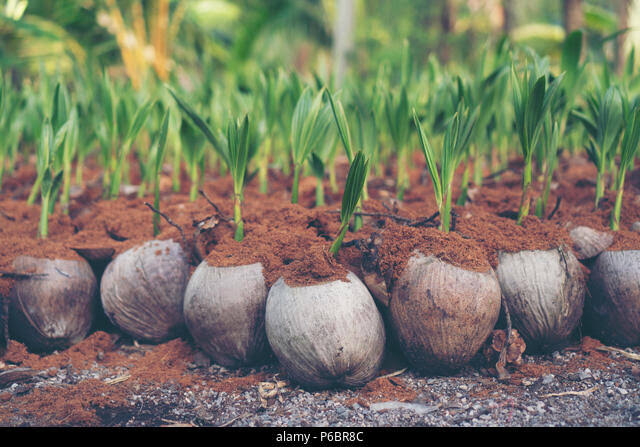
A sprouted coconut is a mature coconut in which the embryo has started to germinate. Unlike a coconut that is simply cracked open for its water and meat, a germinating coconut is biologically active. Given the right conditions, the embryo uses nutrients stored inside the seed to produce new plant tissue. The first visible signs may include a small shoot emerging from one of the coconut’s three germination pores, often called the eyes. These pores are natural weak points in the coconut shell and play an important role in allowing the developing seedling to emerge.
The coconut itself is a seed surrounded by several protective layers. The outer husk provides physical protection, while the hard shell protects the inner seed. Inside are coconut water, coconut meat, and the embryo. During germination, the embryo gradually changes how it uses these resources. Instead of simply storing nutrients, the seed begins supplying energy and building materials for new growth. This makes a sprouted coconut an interesting example of how a plant can remain protected for a long period and then begin active development when environmental conditions become favorable.
How Coconut Germination Begins
Coconut germination starts when the seed encounters conditions that support metabolic activity. Moisture is especially important because water allows cells to become active and supports many chemical reactions involved in germination. Temperature also matters because the enzymes that control biological processes work best within suitable temperature ranges. A warm, humid environment can therefore encourage a viable coconut embryo to begin growing, while unfavorable temperatures or excessive dryness can delay or prevent germination.
After absorbing enough moisture, the embryo becomes metabolically active. Enzymes help break down stored compounds so they can be used as energy and raw materials. The embryo does not immediately depend on sunlight because it has access to stored nutrients inside the coconut. As germination progresses, the developing root and shoot require increasing amounts of energy. The first root structures help the young palm obtain water and minerals after establishment, while the shoot moves upward and eventually develops leaves capable of photosynthesis. This transition marks an important change from seed-based nutrition to independent plant growth.
What Happens Inside a Coconut During Germination
One of the most fascinating parts of sprouted coconut development happens inside the shell, where early changes may occur before the emerging shoot becomes obvious. The coconut embryo draws on stored nutrients as its cells divide and expand. The endosperm, represented largely by coconut meat and liquid resources within the seed, provides carbohydrates, fats, proteins, minerals, and other compounds that support early development. As these resources are mobilized, the internal structure of the coconut can gradually change.
A specialized structure called the haustorium develops during coconut germination and plays an important role in nutrient absorption. It grows into the interior of the coconut and helps transfer stored nutrients to the developing seedling. This structure is one reason the inside of a sprouted coconut can become noticeably different from the flesh of a mature coconut that has not germinated. The coconut seed is effectively converting its stored food into a form that the growing embryo can use. The process demonstrates an important principle in plant biology: seeds carry both the genetic instructions and the stored resources required to begin a new generation.
The Role of Water, Temperature, and Oxygen
Water is one of the key factors in coconut seed germination because dry seeds generally remain in a relatively inactive state. Once sufficient moisture reaches the embryo, cellular activity increases. Water supports enzyme function, nutrient movement, cell expansion, and other processes required for early plant development. However, moisture alone is not enough. A coconut that remains in conditions with poor airflow or excessive standing water may face problems because growing tissues also require oxygen for respiration.
Temperature has a major influence on the speed of germination. Coconuts are tropical seeds, so warm conditions generally provide a more suitable environment than cold temperatures. In a favorable environment, biochemical reactions can proceed efficiently, allowing the embryo to develop more quickly. Light is also important later in the process, especially once leaves emerge and the young palm begins photosynthesis. However, the early embryo can rely heavily on stored energy before it develops enough green tissue to manufacture its own food. These factors work together rather than independently, which explains why successful coconut sprouting depends on a combination of moisture, warmth, oxygen, and seed viability.
From Germinating Seed to Young Coconut Palm
Once the coconut embryo has established its initial root and shoot growth, the plant begins moving toward the next stage of its life cycle. Roots provide anchorage and help the developing palm absorb water and minerals from its surroundings. The shoot grows upward, eventually producing leaves that can capture sunlight. Through photosynthesis, these leaves manufacture sugars that become the plant’s primary source of energy. At this stage, the young coconut palm becomes increasingly independent of the stored nutrients that originally supported germination.
The early development of a coconut palm shows why the seed’s protective structure is so valuable. A mature coconut can protect its embryo while it is transported by water, animals, or human activity. In natural environments, this ability can help coconut palms spread across tropical coastal areas. Once conditions are suitable, the coconut transitions from a protected seed into an actively growing plant. The sprouted coconut is therefore not simply an unusual food item; it represents a living stage in the coconut palm’s reproductive cycle. Its development connects seed anatomy, plant physiology, nutrition, and environmental adaptation.
Conclusion
The science behind sprouted coconut development reveals a carefully organized process that begins when a mature coconut seed receives suitable environmental conditions. Moisture activates the embryo, warmth supports biochemical reactions, oxygen enables respiration, and stored nutrients provide the energy and building materials needed for early growth. As the embryo develops, roots and shoots emerge, while the haustorium helps transfer nutrients from the coconut’s stored resources to the growing seedling. Eventually, new leaves allow the young palm to produce energy through photosynthesis.
Understanding coconut germination also explains why a sprouted coconut looks and behaves differently from an ordinary mature coconut. What appears to be a simple change inside the coconut is actually a complex biological transformation from stored seed to developing plant. From the first signs of embryo activity to the emergence of roots and leaves, every stage reflects the remarkable ability of plants to protect, nourish, and reproduce themselves. For anyone interested in tropical plants, seed germination, coconut biology, or natural food science, the sprouted coconut provides a fascinating example of plant life beginning from within a single protected seed.
