
Table of Contents
How can a vaccine treat a cancer that is already there — and how can it be personalised to a single patient? The NeoVax programme offers the clearest current answer. In a phase 1 trial published in Nature Medicine, NeoVax was combined with nivolumab in platinum-sensitive ovarian cancer and found to be feasible, with an acceptable safety profile. This explainer walks through how the treatment is built, how the combination is supposed to work, and how to interpret what the trial actually demonstrated.
How NeoVax is built, step by step
First, doctors take a sample of the patient’s tumour, plus a blood sample representing healthy tissue. Sequencing machines read both, and software subtracts one from the other to isolate mutations found only in the cancer. Those mutations produce neoantigens — abnormal protein fragments that healthy cells never display. Algorithms rank the fragments by how likely the immune system is to recognise them, and a vaccine is manufactured containing the leading set. Every patient receives a different product, because every tumour’s mutation list differs.
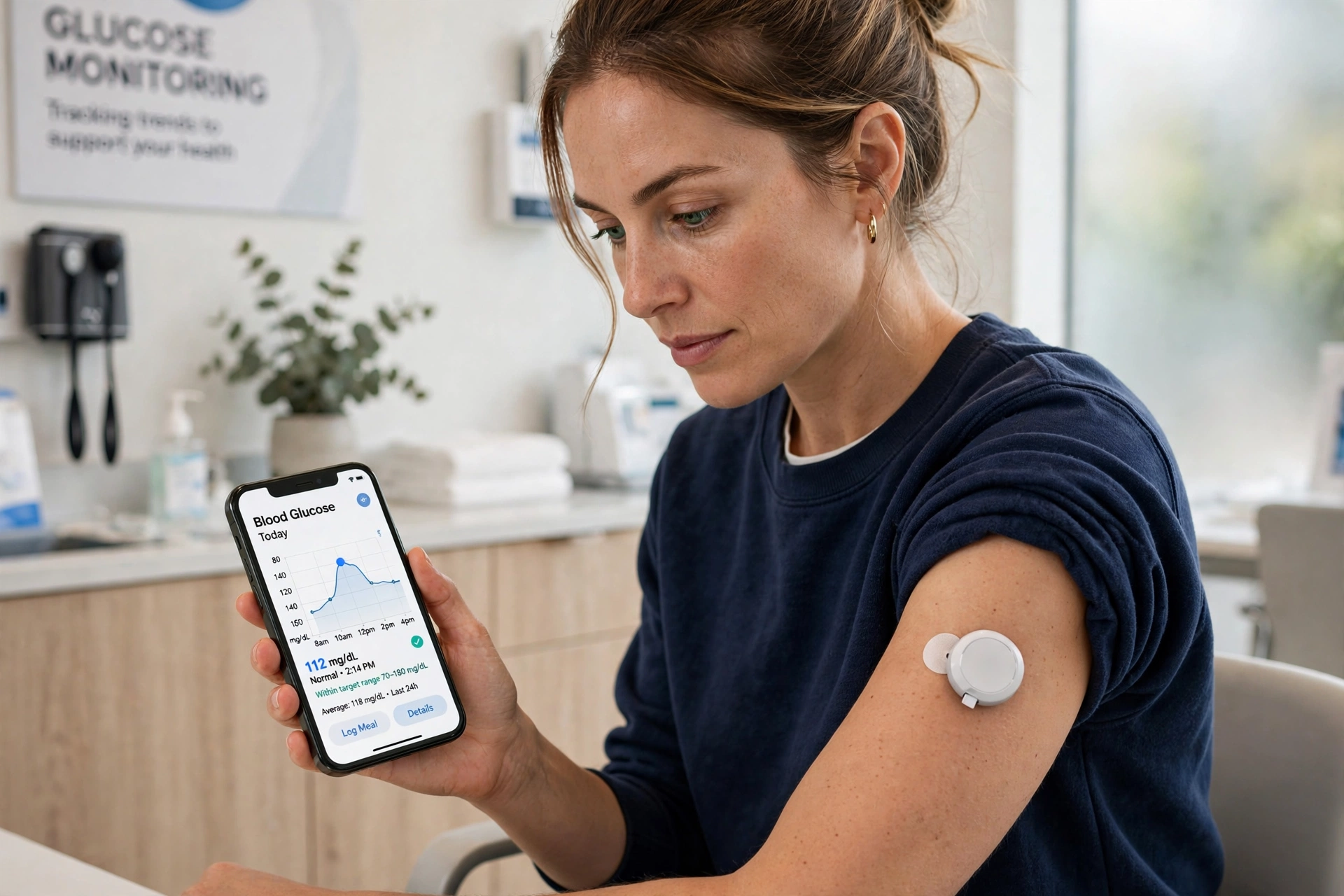
The analogy with other personalised health technology is imperfect but helpful: just as our explainer on how glucose monitors performed in a type 2 diabetes trial described devices tuned to one person’s patterns, NeoVax is therapy tuned to one person’s tumour — at vastly greater complexity and cost.
How the nivolumab partnership is meant to work
A vaccine’s job is instruction: show the immune system the neoantigens until it produces T cells able to hunt cells displaying them. The obstacle is that cancers defend themselves using checkpoints — molecular brakes that switch T cells off. Nivolumab blocks the PD-1 brake. The intended division of labour is therefore simple to state: NeoVax teaches, nivolumab protects the lesson from being cancelled. Whether that synergy delivers clinical benefit is precisely what later trials must test.
The phase 1 findings themselves are set out in Nature Medicine, and the journal’s report is careful to frame them as feasibility and safety results.
How to read a phase 1 result without fooling yourself
Ask three questions. Did the treatment get made and delivered as designed? Here, yes — the personalised pipeline functioned. Were side effects within a manageable range for closely monitored patients? The researchers report an acceptable profile, while noting immunotherapy risks are real. Did the trial prove patients live longer? It could not: small, single-group phase 1 studies contain no comparison that would let anyone draw that conclusion, and the authors do not attempt to.
That third answer often disappoints, but it is how reliable medicine is built. Skipping from ‘safe in a few patients’ to ‘available treatment’ is the route by which unproven clinics profit and patients get hurt.
How the story continues from here
The next how is procedural: a randomised trial, in which comparable patients receive the combination or a control treatment, followed long enough to measure recurrence and survival. Alongside it runs a manufacturing question — how to produce bespoke vaccines faster and more cheaply, at scale, without losing the quality control that makes each batch trustworthy.
So, how do personalised cancer vaccines work? By converting a tumour’s own mutations into a training set for the immune system, then defending that training with a checkpoint drug. NeoVax’s first ovarian cancer trial shows the machinery runs and is tolerable enough to proceed. Whether it changes outcomes is the next explanation this field owes its readers — and it can only be written after the controlled evidence arrives.
A final practical point completes the picture. Because each NeoVax batch is unique, quality control cannot rely on testing a sample from a large identical run; every individual vaccine must be verified on its own. That requirement explains much of the approach’s cost and much of the trial’s significance — the team demonstrated not just a biological idea, but a quality system capable of releasing a different product for every participant without a safety failure. Scaling that system, without diluting its checks, is the engineering challenge now sitting alongside the medical one.
