
Table of Contents
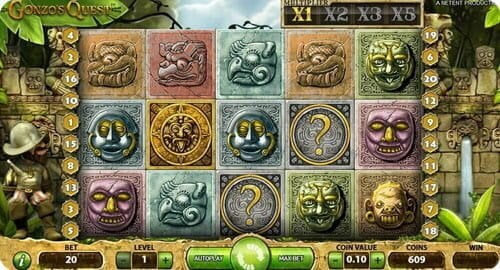
Modern slot architecture relies on a precise interplay between mathematical probability and visual payout engines. Understanding how paylines, cascading symbols, and dynamic multipliers interact allows players and game analysts to dissect structural hit frequencies and theoretical returns.
While classic reel machines relied on fixed physical lines, modern digital titles use sophisticated software frameworks driven by Pseudorandom Number Generators (PRNGs). Exploring these underlying systems reveals how payout structures operate across different volatility spectrums in contemporary Slot Games (슬롯게임).
Evolution of Modern Payline Systems
Paylines define the specific geometric pathways across a reel grid where matching symbol sequences trigger a payout. In traditional three-reel formats, a single horizontal line across the middle row dictated win conditions. Modern video configurations expand this framework across multi-row grids, offering anywhere from 10 to over 100 fixed evaluation paths.
Beyond fixed paths, modern game design incorporates “Ways-to-Win” engines. Instead of requiring symbols to follow a strict pre-drawn path, adjacent matching symbols from left to right establish winning combinations. This mathematical shift increases available outcome pathways to 243, 1,024, or even dynamic 117,649 permutations, significantly raising base-game hit frequency.
Mechanics Behind Cascading Reels
Cascading reels—frequently called tumbling or avalanche reels—fundamentally transform a single spin into a multi-phase evaluation cycle. When a winning combination forms on the grid, those specific symbols are evaluated, credited, and immediately cleared from the board.
[Winning Combination Formed]
│
▼
[Symbols Cleared & Payout Credited]
│
▼
[Gravity Cascade: Symbols Drop Down]
│
▼
[New Symbols Fill Upper Vacancies]
│
▼
[Re-evaluation: Additional Wins?]
├── YES ──► (Cycle Repeats)
└── NO ───► (Spin Concludes)
New symbols drop down from above to fill the empty positions, allowing for sequential win opportunities within the same paid turn. Research from independent gaming auditing bodies, such as eCOGRA, confirms that each cascading cycle maintains independent RNG calculations for incoming symbols.
Multipliers and Payout Scaling
Multipliers serve as dynamic payout scaling mechanisms that boost base win values by fixed or progressive factors. These modifiers operate across three main implementation styles:
- Fixed Multipliers: Attached directly to special wild symbols or specific symbol combinations, doubling or tripling that individual payout.
- Progressive Multipliers: Linked directly to cascading sequences, increasing by +1x or higher with every consecutive symbol tumble during a single spin cycle.
- Global Bonus Multipliers: Applied to total accumulator pools during feature rounds, remaining active or increasing across entire free-spin sessions.
When progressive multipliers compound alongside cascading reels, payout acceleration increases exponentially. This synergistic combination forms the mechanical foundation of modern high-volatility slot models.
Structural Comparison of Engine Features
Comparing these core mechanics illustrates how different feature combinations impact total win potential and session volatility.
| Feature Mechanism | Primary Function | Hit Frequency Impact | Volatility Rating |
| Fixed Paylines | Evaluates matches along static geometric lines | Moderate | Low to Medium |
| Ways-to-Win | Evaluates matching symbols on adjacent reels | High | Medium |
| Cascading Reels | Replaces winning symbols to extend single spins | High | Medium to High |
| Progressive Multipliers | Scales sequential payouts by escalating factors | Variable | High |
| Cluster Pays | Evaluates orthogonal blocks of matching icons | High | Medium to High |
Understanding these structural parameters provides valuable perspective on how math models dictate total return distributions. Standardized testing documentation published by Gaming Laboratories International (GLI) outlines how these engine variations are rigorously audited to ensure strict alignment with advertised Return-to-Player (RTP) metrics.
Algorithmic Mathematics and Fair Play
Every modern slot outcome is governed by a Pseudorandom Number Generator (PRNG) running complex algorithms thousands of times per second. When a player initiates a spin, the PRNG locks in precise numerical values that map directly to reel stop positions.
Regulatory bodies like the Malta Gaming Authority require certified mathematical models to verify that cascading chains and multiplier distributions operate without bias. Mathematical analyses published through peer-reviewed repositories like IEEE Xplore demonstrate that feature combinations are carefully balanced to maintain exact statistical RTP boundaries over millions of automated test spins. Participating in software practice sessions allows enthusiasts to study these theoretical mechanics firsthand in various digital Slot Games (슬롯게임) formats.
Frequently Asked Questions
What is the primary difference between fixed paylines and ways-to-win systems?
Fixed paylines require matching symbols to align along specific pre-defined geometric paths across the reels. Ways-to-win systems award payouts for matching symbols anywhere on adjacent reels from left to right, regardless of row position.
How do cascading reels affect the overall RTP of a game?
Cascading reels do not directly raise the overall Return to Player (RTP) percentage, which is hardcoded into the mathematical software model. However, they redistribute hit frequency by enabling multiple sequential payouts within a single wager.
Can progressive multipliers reset during base game spins?
Yes. In most base game structures, progressive multipliers increase with each consecutive tumble during a single spin and reset back to their starting value once no further winning combinations land.
How are random outcomes guaranteed during consecutive cascades?
Every incoming symbol in a cascade is selected independently by the underlying PRNG software at the moment of the drop, ensuring that every tumble step remains completely random and fair.
Do cluster pay mechanics use traditional paylines?
No. Cluster pay mechanics completely eliminate traditional paylines, instead awarding wins whenever a designated minimum group of matching symbols touch horizontally or vertically anywhere on the grid.
Strategic Technical Synthesis
Mastering the structural dynamics of payline geometries, tumbling symbol cascades, and mathematical multipliers equips players with deep insight into modern game mechanics. Recognizing how PRNG algorithms dictate reel outcomes highlights the precision engineering driving modern digital entertainment. Analyzing feature mechanics, variance curves, and payout engines allows for an authoritative, informed perspective on state-of-the-art software systems.
